You built the business. But you can't demonstrate its true value in real time.
Right now your business lives in your head and last year's accounts. I install Evolve OS to change that: your real numbers on a weekly rhythm, your plan and priorities in one place, and a map of exactly how your business creates and transfers value — every stage, every owner, one screen. So you see the whole machine at a glance, run it without being in every part of it, and can demonstrate its true value on demand.
The one a buyer actually pays for — the one that survives due diligence.
Most brokers (not all) never do deeper due diligence on this. They put whatever your accountant last sent into a brochure and take it to market, and the data is never up to date. When a buyer asks for current figures, it's "I'll request them," then most of the time it's weeks of silence: because when they ask you, you can't produce them, and your accountant moves at a snail's pace.
"I keep your true number on one screen, and every add-back defensible. When a buyer asks, you answer in seconds — which in turn demonstrates you understand the value of your business."
You've thought at least one of these.
I know we're busy, but I couldn't tell you today if we're actually making money.
The whole thing runs through me. If I stopped, it'd stop.
I want out eventually — but every time I think about it, I put it off.
I don't want a broker overselling it and then watching it fall apart.
You're not disorganised. Nobody built you a place to see the truth in real time. So I did.
It's not the people. It's two methods I keep seeing fail.
I've been the owner staring at books that don't add up, and I've sat across the table from the brokers. This isn't theory — it's what I've watched play out, deal after deal.
The method — not the person keeping them.
- ✗Done once a quarter or once a year — no automation, no live view.
- ✗Reconciliation errors and whole transactions missing.
- ✗Bad add-backs quietly inflating your EBITDA.
I've seen this even with owners who swear their accountant is good. The person holding your numbers isn't really looking.
The method — not the broker running it.
- ✗No proper due diligence on your data.
- ✗Last year's figures dropped into a brochure — stale, unverified.
- ✗A buyer digs in, the numbers don't hold — the deal stalls or the price gets cut.
Not every broker. But most I've dealt with — so the odds this happens to you are high.
And the first method feeds the second — stale books become a stale brochure. So I install the opposite of both.
One connected system your whole business runs on.
Not another dashboard. Your direction, your real numbers, your weekly rhythm and the machine underneath — in one place, all pulling through to each other. Enter a number once and it colours the Scorecard, reaches the person who owns it, and gets read in your weekly sync.
Buyers don't pay for a busy owner. They pay for a business that runs on a system instead of on you — and every screen below is built to prove that's true, then make it true.
Your whole plan on one page — the same truth in every head.
Vision holds the northstar, the mission and your 3/5/10/20-year horizons. The Quarterly Plan is the engine: your three-to-five priorities on one sheet — where each is going, where it actually is, and the next move. Set a goal here and it flows live onto the Vision cover. No retyping, no deck no one reopens. Every priority owned by a name.
A plan that lives in the business — not the founder's head — is one a buyer trusts will outlast you. Documented direction lowers risk, and risk is what sets the multiple.
· Stock POs placed
· 2 campaigns/wk
· 3 accounts opened
Your real numbers — live from your books, ready for any buyer.
The Ledger reads straight from Xero or QuickBooks: trailing-twelve P&L, balance sheet, a 13-week cash runway, and a true-EBITDA bridge across three years. Toggle accrual or cash, compare against last year, drill into any month. Every add-back needs a written reason — the rest show NOT COUNTED — so the figure you quote survives due diligence.
Clean, defensible numbers are the difference between an offer and a retrade. Diligence-ready books protect your price the moment a buyer starts digging.
| FY23 | FY24 | FY25 | TTM | |
| Net profit | £214k | £246k | £272k | £279k |
| + Interest | 9 | 8 | 7 | 7 |
| + Tax | 44 | 51 | 58 | 60 |
| = EBIT | £267k | £305k | £337k | £346k |
| + D&A | 16 | 17 | 18 | 18 |
| + Add-backs | 12 | 14 | 16 | 16 |
| + Adjustments | 18 | 20 | 22 | 22 |
| TRUE EBITDA | £313k | £356k | £393k | £402k |
The numbers get entered, the misses get a plan, the meeting actually happens.
Each week your team enters its own numbers on the Scorecard and calls the colour — green, amber, red. A miss asks one question, "what's the plan?", and it's on the record. Then the Weekly Sync walks all of it in eight guided steps — wins, numbers, frictions, a walk of every goal, and a Presence check that captures your gut read as a 1–10 you can trend. Every sync writes itself up as the week's memo.
A business that runs to a rhythm without the owner in every room survives the handover — and a business that survives the handover is worth more.
See every place the business is still just you — and hand it over.
Value Flows draws how your company actually makes and delivers value — every stage with an owner, a live KPI, and a playbook. The accountability read-out shows who runs what; the gaps shows every stage with no owner or no system — every place the business can't yet run without you. Close them one owner at a time.
This is the one buyers pay the multiple for. Every stage with a named owner proves the business runs without you — and the structure to replace yourself already exists. Visible, already-shrinking founder-dependency is a de-risked, more valuable asset.
The rest of the system — so the whole company works, decides and remembers in the same place.
Decide the same way every time.
Run any big decision through four gates — Truth, Reality, Creation, Value. Pass all four, or it's a not-yet. Every call on the record.
The meeting that runs itself.
An eight-step ritual — wins, numbers, frictions, a walk of every goal, and a Presence check that logs your gut as a 1–10. Every sync writes itself up.
Talk where the work is.
Threads, mentions, reactions, voice notes — built into the OS. A thrown-out idea becomes a logged decision; a "can you…" an owned commitment.
Everyone's own cockpit.
What's mine this week, what needs a reply, what's overdue — one place per person. Nobody says "I didn't know it was mine."
Memory that isn't in your head.
Close a quarter and it writes a permanent memo — plan, results, decisions, gut-trend. Memory a buyer or a new manager can actually read.
Type it once. It flows everywhere.
One number, one decision, one plan — connected across every screen above.
The work that makes a business worth buying happens 1 to 3 years before the sale — building the system, the numbers and the team that prove it runs without you. That's the part everyone skips. It's the only part I do.
Two roads — and I walk both with you.
"I want to grow it — and maybe sell part of it later."
You keep the soul. I take the spreadsheet.
You built something people love — and you're stretched thin doing the "business bit."
Partial now, more later — if and when it's right.
"I want to sell and retire — cleanly, for a fair price."
Realise the value. De-risk the exit. Get out clean.
Year-end accounts are months old — and deep down, the business is really you.
You sell to someone already inside — not a nervous buyer who pulls out after six months.
My books are a mess / behind — will this even work?+
Then you're exactly who this is for. Your books are behind because your accountant does them once a quarter or once a year, with no automation — and, from every UK owner I've spoken to lately, usually with mistakes in them. Rebuilding that is the first thing I install: a proper weekly or monthly finance rhythm, automated, so for once your numbers are real. And the software won't show a total that doesn't add up, so it catches the mistakes instead of burying them.
Is my data safe?+
Built to the standard a buyer's own advisor would check. Every company's data is isolated at two layers — in the app and in the database itself. Your financial connections are encrypted at rest with AES-256, and I connect to your books read-only.
I'm not actually ready to sell.+
Good — neither are most people who get the most out of this. It's a clarity tool first. Becoming worth buying is a side effect of finally running your business on the truth. If you never sell, you still run a far better business.
Aren't you just another broker?+
No. A broker earns a fee whether you sell or not, and has every reason to oversell you. I have no listing fee and no mandate to win. I make money by helping the business actually grow — and, when it's right for both sides, by partnering or buying on real numbers. And the honest bit: not every conversation ends in a deal, and that's fine. You still come out with a business running on the truth and ready to sell — to me or to anyone.
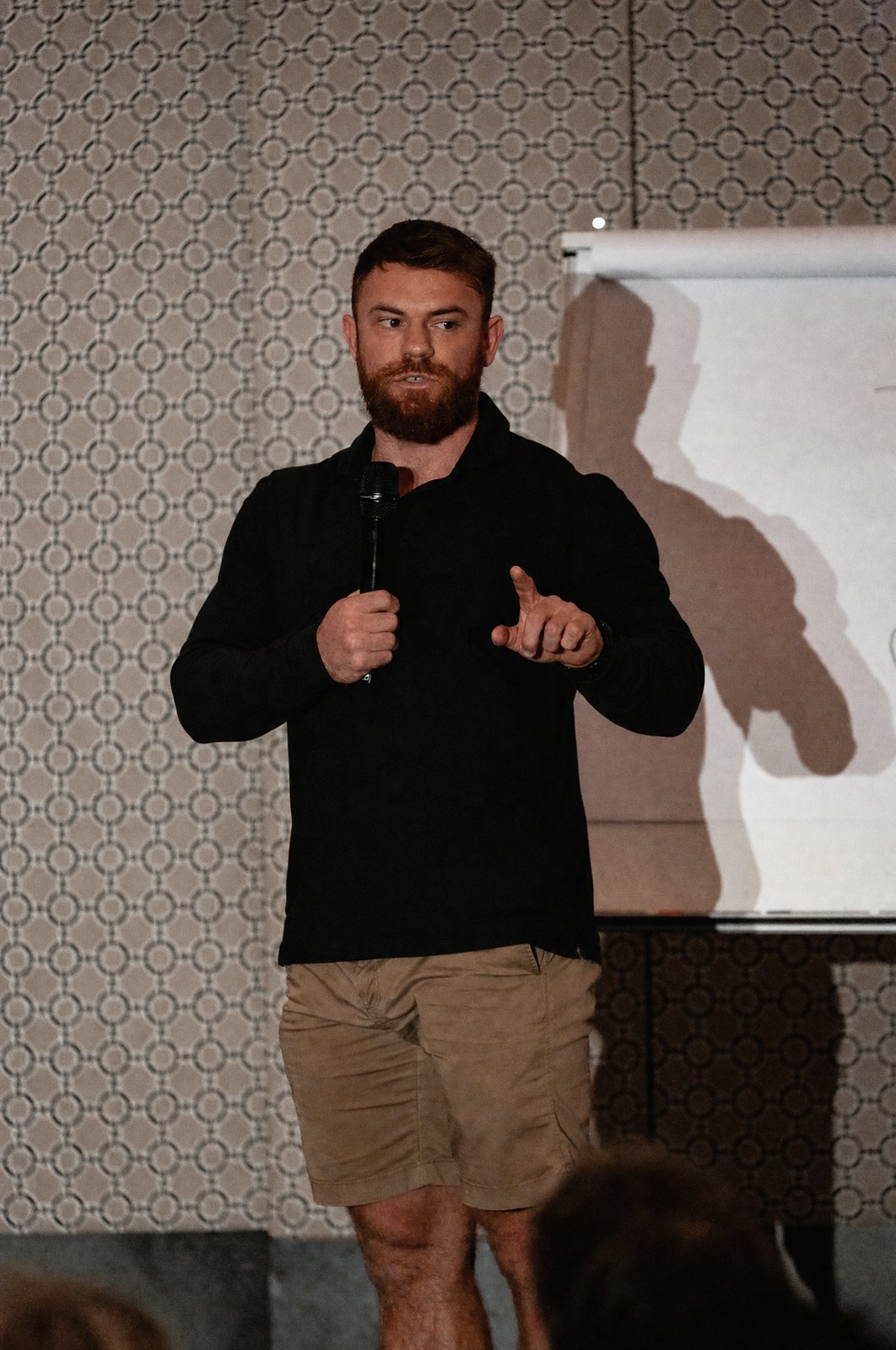
Since landing back in the UK from living in Australia for 7 years, where I built a business with a partner to 8 figures, I've spoken with hundreds of business owners and brokers. This solution has been built from my own frustrations with owners, accountants and brokers that are taking their business to market and are clearly not ready for the sale.
This is what you need — and you might even get a buyer out of it (me).
See your business clearly
Thinking about selling?
30 minutes is enough to know if there's something worth pursuing. No pitch. No deck. No commitment. Tell me a little about your business and I'll call within one business day.